
 sourov.8@outlook.com
 The Future at Work An Executive Manager in Virtual Reality
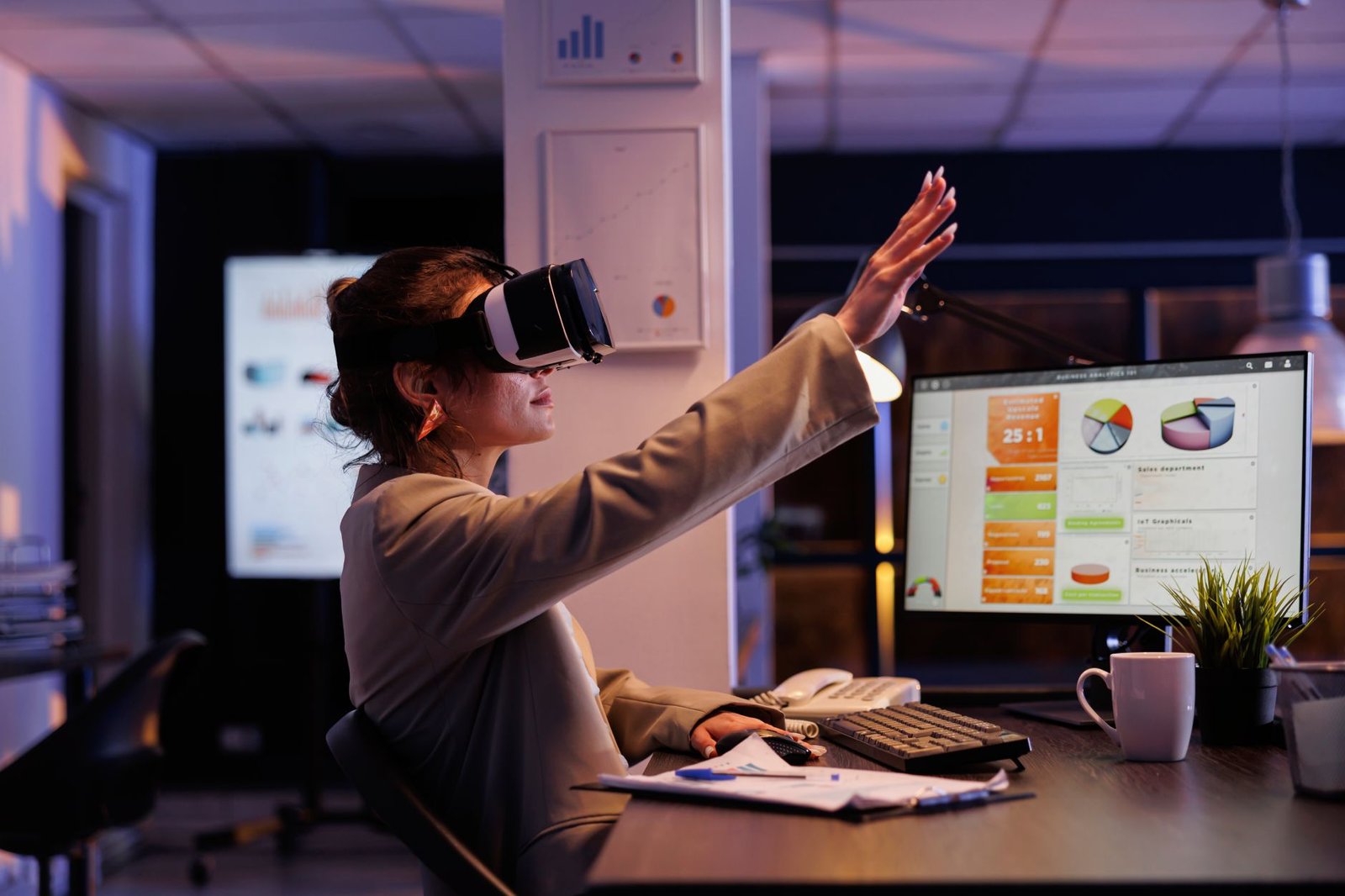
In today’s rapidly evolving digital world, the image of an executive manager wearing a virtual reality headset is no longer futuristic—it’s becoming a reality. Technology is reshaping how leaders think, plan, and interact, and virtual reality (VR) is at the forefront of this transformation.
Imagine a corporate leader stepping into a fully immersive environment where data is not just seen but experienced. Instead of looking at flat charts or static reports, they can walk through 3D visualizations, interact with real-time analytics, and simulate business scenarios. This level of engagement allows for deeper understanding and smarter decision-making.
For executive managers, VR opens doors to innovation in multiple areas. Meetings can be held in virtual spaces, bringing together global teams without the limitations of physical distance. Training sessions become more effective, as employees can practice real-world situations in a safe and controlled environment. Product development also benefits, with managers able to visualize prototypes before they even exist in the physical world.
Beyond functionality, there’s also a symbolic element to this image. A manager embracing VR represents adaptability and forward-thinking leadership. In a competitive business landscape, those who adopt new technologies early often gain a significant advantage. It shows a willingness to explore, experiment, and evolve.
However, like any technology, VR comes with challenges. Implementation costs, learning curves, and integration with existing systems can be barriers. Yet, as technology becomes more accessible, these challenges are gradually diminishing.
Ultimately, the executive manager wearing a virtual reality headset represents more than just a moment—it symbolizes a shift in how businesses operate. It’s a glimpse into a future where leadership is not confined to boardrooms but expanded into limitless digital environments.
0 Comment