
 sourov.8@outlook.com
 Engineering the Future VR Technology and Robotic Automation
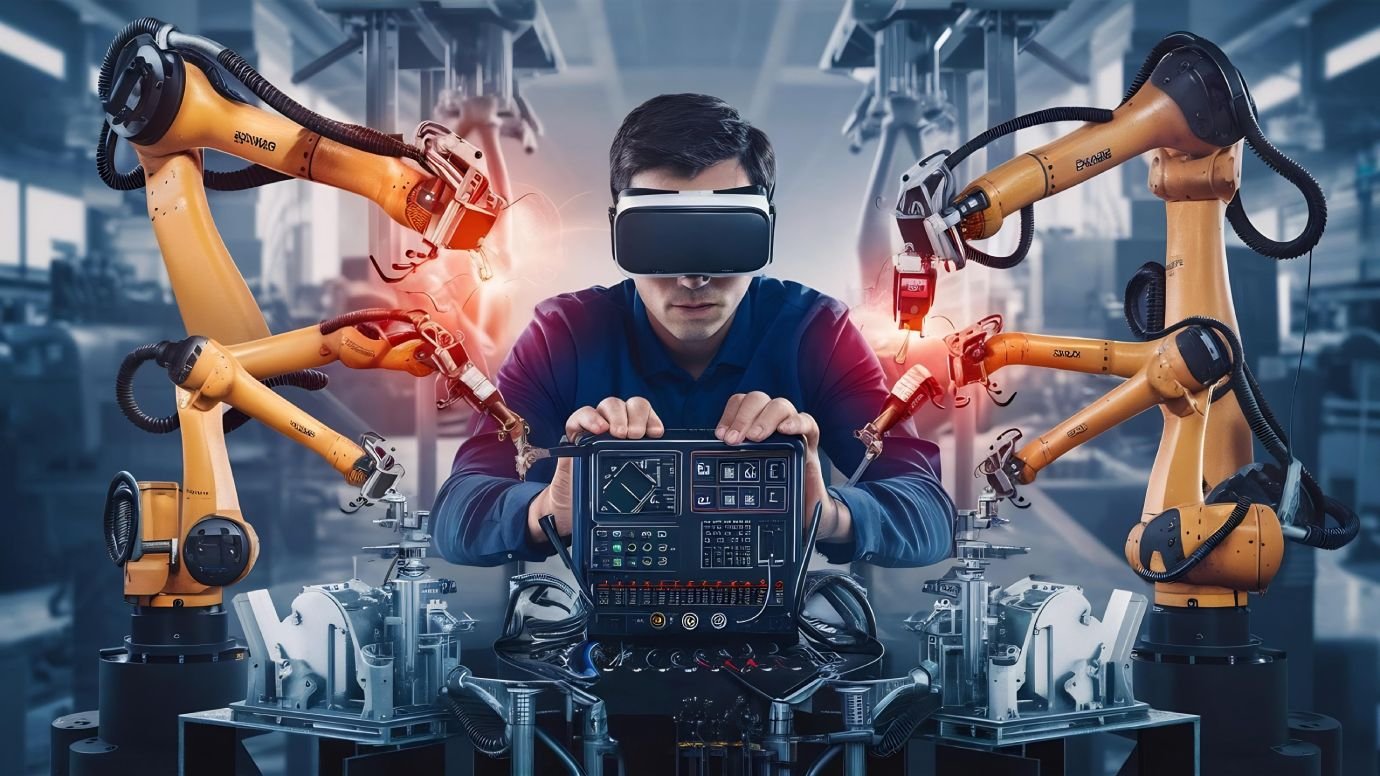
In the age of smart manufacturing, the image of an engineer using virtual reality technology to monitor robotic arms and automated welding systems represents the future of industry. It’s a powerful combination of human intelligence and advanced robotics, where innovation transforms traditional manufacturing into highly efficient, technology-driven operations.
Virtual Reality (VR) is changing how engineers interact with complex machinery. Instead of relying solely on physical controls and monitors, engineers can now step into immersive digital environments where they visualize production systems in real time. Through VR interfaces, they can inspect robotic movements, analyze workflows, and detect potential issues before they affect production.
Robotic arms and automated welding machines play a central role in modern industrial automation. These systems perform highly precise and repetitive tasks with speed and consistency that would be difficult to achieve manually. In industries such as automotive manufacturing, aerospace, and heavy engineering, robotic welding improves both efficiency and accuracy while reducing operational risks.
The engineer remains at the center of this technological ecosystem. While robots execute tasks, human expertise guides programming, quality control, and system optimization. VR technology enhances this role by giving engineers deeper insight into machine performance and production efficiency.
Smart factories are increasingly integrating Artificial Intelligence (AI), Internet of Things (IoT) devices, and automation systems alongside VR tools. Together, they create connected environments where machines communicate, collect data, and adapt processes in real time. This leads to faster production, reduced waste, and improved safety standards.
Visually, the combination of glowing digital interfaces, industrial robotics, and immersive VR equipment creates a futuristic atmosphere that reflects the rapid evolution of engineering and manufacturing.
Ultimately, this scene symbolizes more than technological advancement—it represents the collaboration between human innovation and intelligent machines, shaping the future of automation, precision, and industrial productivity.
0 Comment